

Context
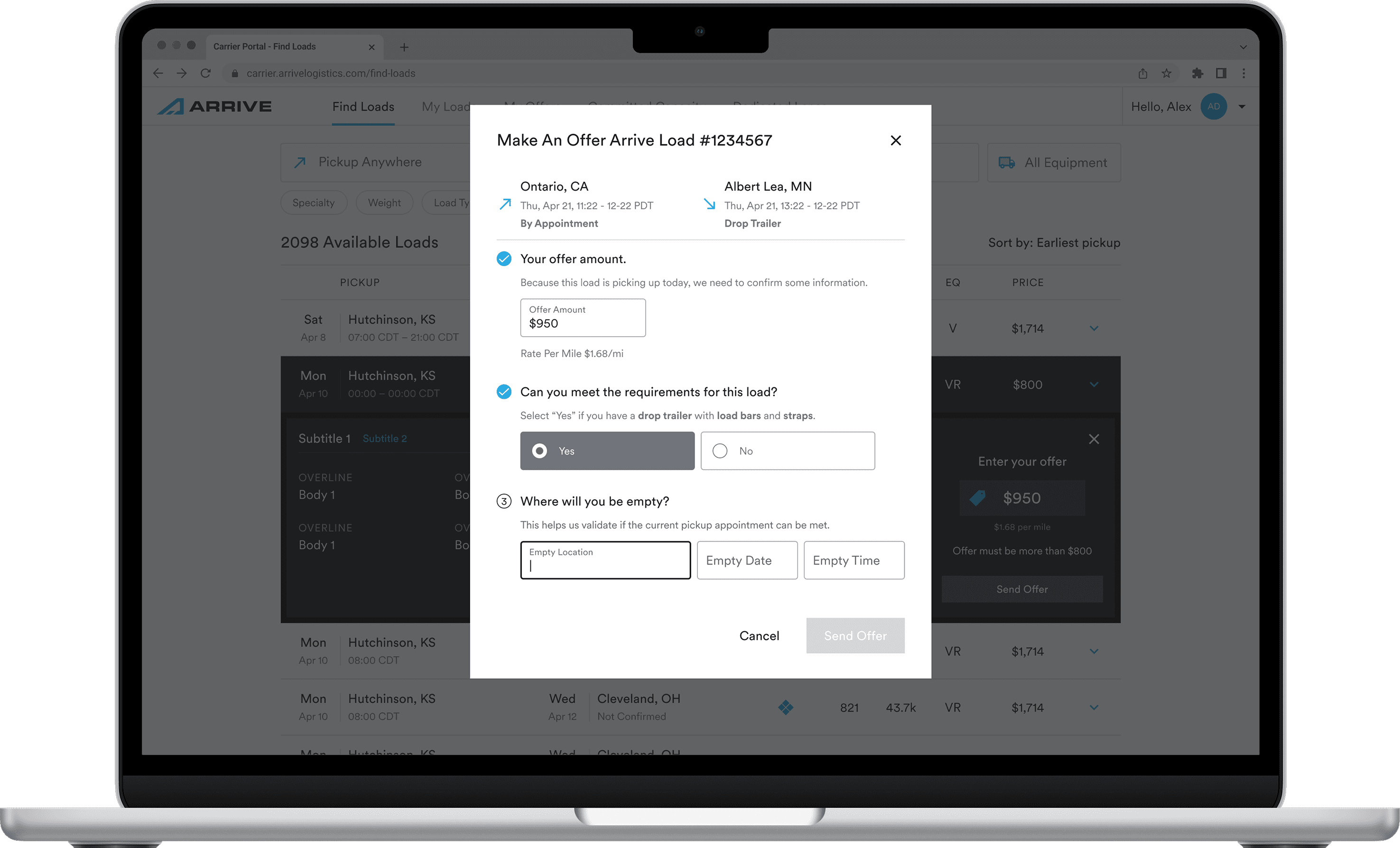
ARRIVEnow™ Carrier Portal
Intro
As carrier and offer management UX team lead, I transformed off platform rate negotiations into an integrated, on platform booking experience for ARRIVEnow™ Carrier.
I designed an in flow countering feature that removed manual operational friction and improved carrier trust. This shift cut check calls by 40% and increased daily bookings by 67%, while establishing the data foundation needed for future pricing automation.
This work became the customer experience gold standard at Arrive. It defined the foundation for the DOT design system and set the blueprint for scaling usability and branded experiences across the broader B2B ecosystem.
Explosive Growth and the ARRIVEnow Carrier Portal
Freight tech is cutthroat. Arrive didn't just survive, they charged ahead scaling from $530M in 2019 to $1.6B in 2021 and $2.35B in 2022, hungry to challenge the top 10 brokers. The ARRIVEnow Carrier portal I helped lead drove key growth. Rolled out progressively from 2020, it handled over 40% of total bookings by late 2022.
The Problem
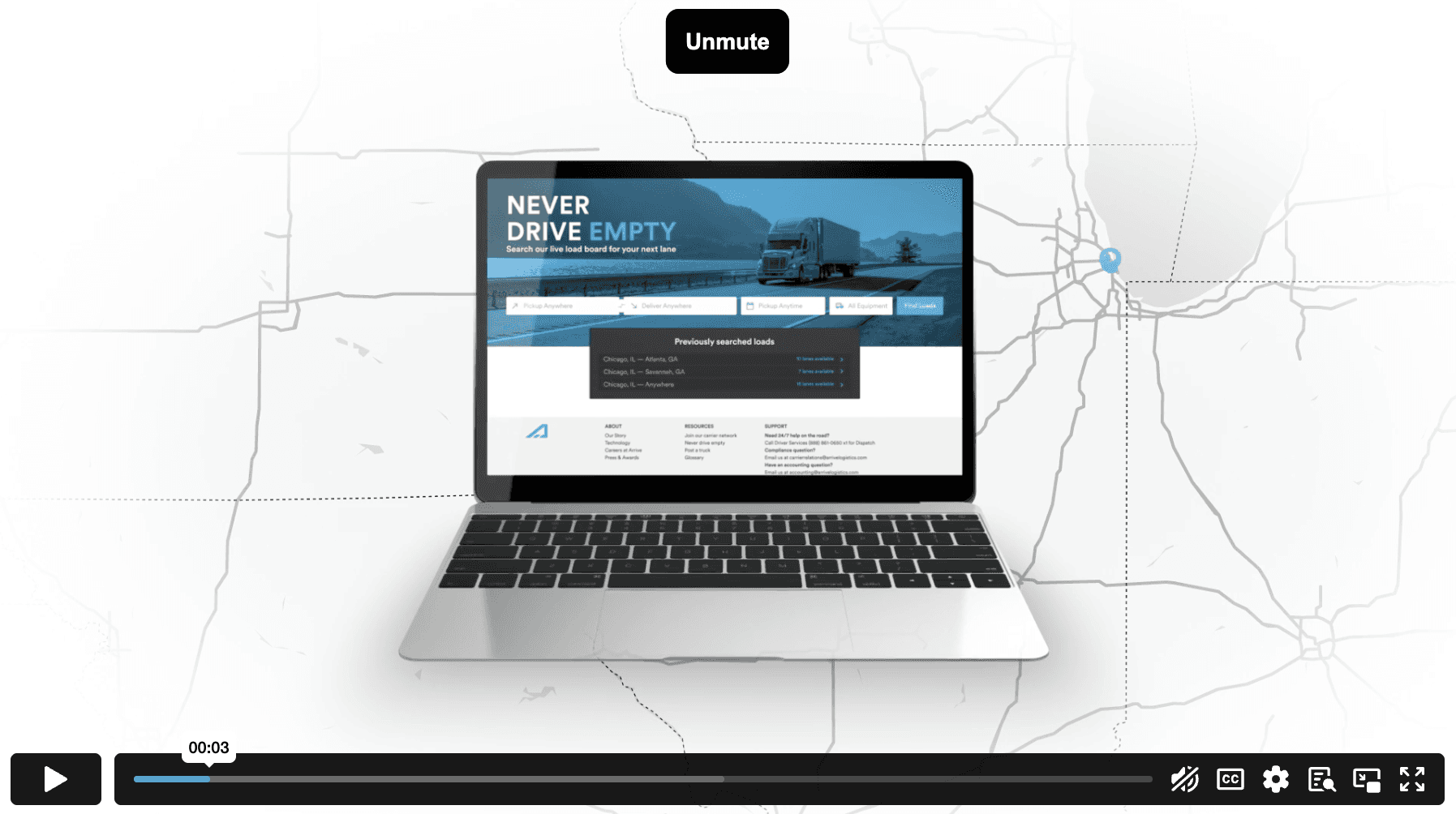
The platform treated every load as a generic "Data Object."
Product stakeholders came to us asking for a design solution to cut load cancellations and improve pre-pickup compliance.
We relied on quantitative and qualitative research sources; two stories stood out and captured the carrier frustration perfectly.

“After I won the offer and booked the load, I found out it was alcohol. My driver is Muslim and can’t haul it, so we had to cancel. That should be visible before booking.”
—Interview Feedback

“I didn’t realize the load needed a liftgate until after I accepted it. My driver only runs a dry van with no access to a gate, so we had to cancel.”
—Interview Feedback
We conducted semi-structured interviews with 15 carriers
Carriers chase top-paying loads across boards. Miss their margin, they book elsewhere.
In my role as the carrier and offer management UX team lead, I worked closely with engineers through design reviews, shared Figma prototypes, and daily standups to align on feasibility early. I partnered with the PM lead on roadmap workshops, sprint planning, and frequent syncs to prioritize and handle trade-offs together.
The Opportunity
We make usability the hidden driver of growth and retention.
End to end workflows for carriers needed to be created, since one didn’t exist yet.
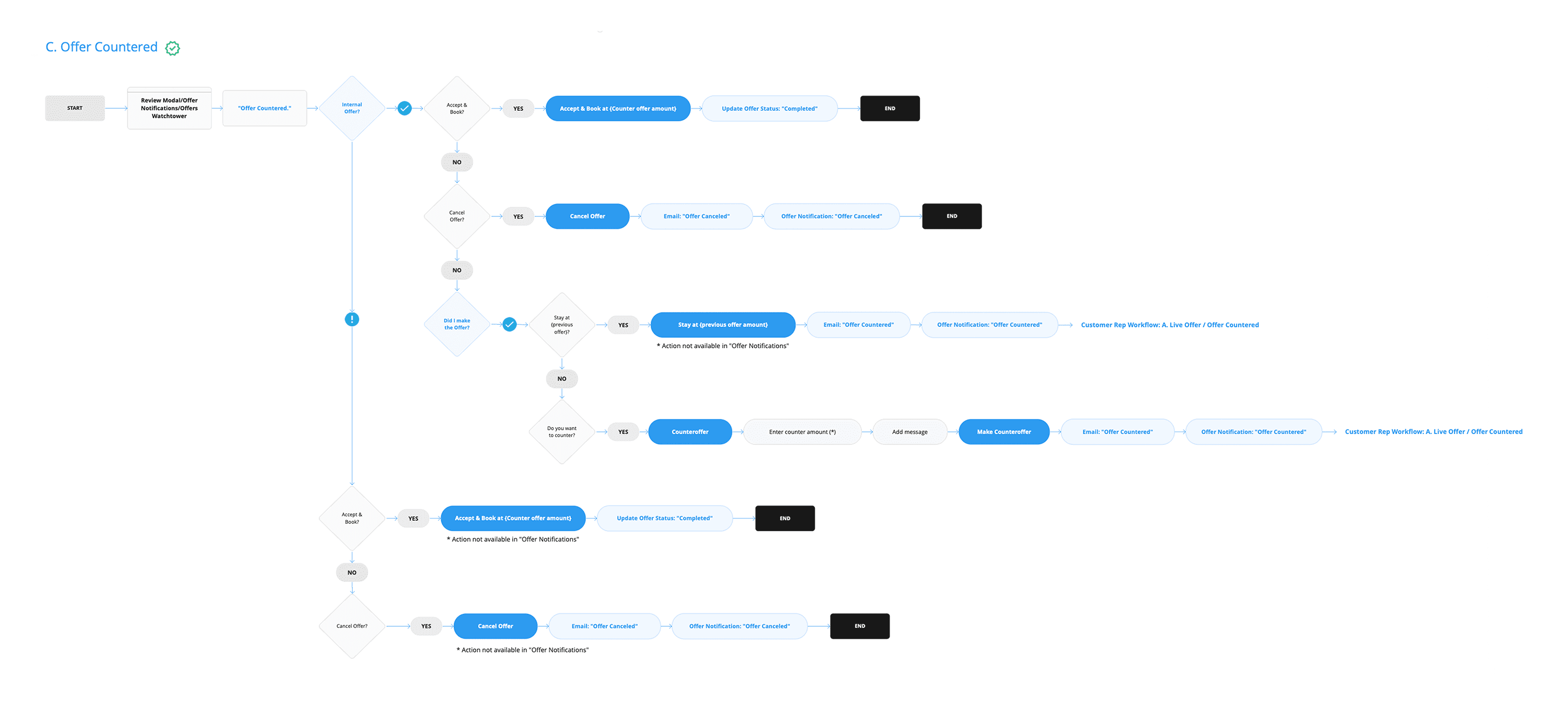
Carrier Workflow (Offer Countered)
Interviews with reps confirmed the human side of where carriers are getting stuck pushing them back to phone calls and texts.

“I’ve run into issues where carriers say pickup times are too rigid. They need more flexibility to fit their schedules and avoid missing loads.”
—Rep Feedback
I validated workflows with reps and teammates by tying each carrier action back to how the internal system processed offers.

Booking Scenarios
“The new workflows in the Carrier Portal have been a game-changer! Plus, they speed up the planning process.”
—Project Manager Feedback
We planned under tight constraints, treating the work as a revamp rather than a redesign, centering the first sprint on user research and planning, and pushing pragmatic fixes without major rewrites.

How Might We...
Build an intuitive booking experience centered on carriers?
I used design principles to evaluate tradeoffs and focus on the improvements that mattered.
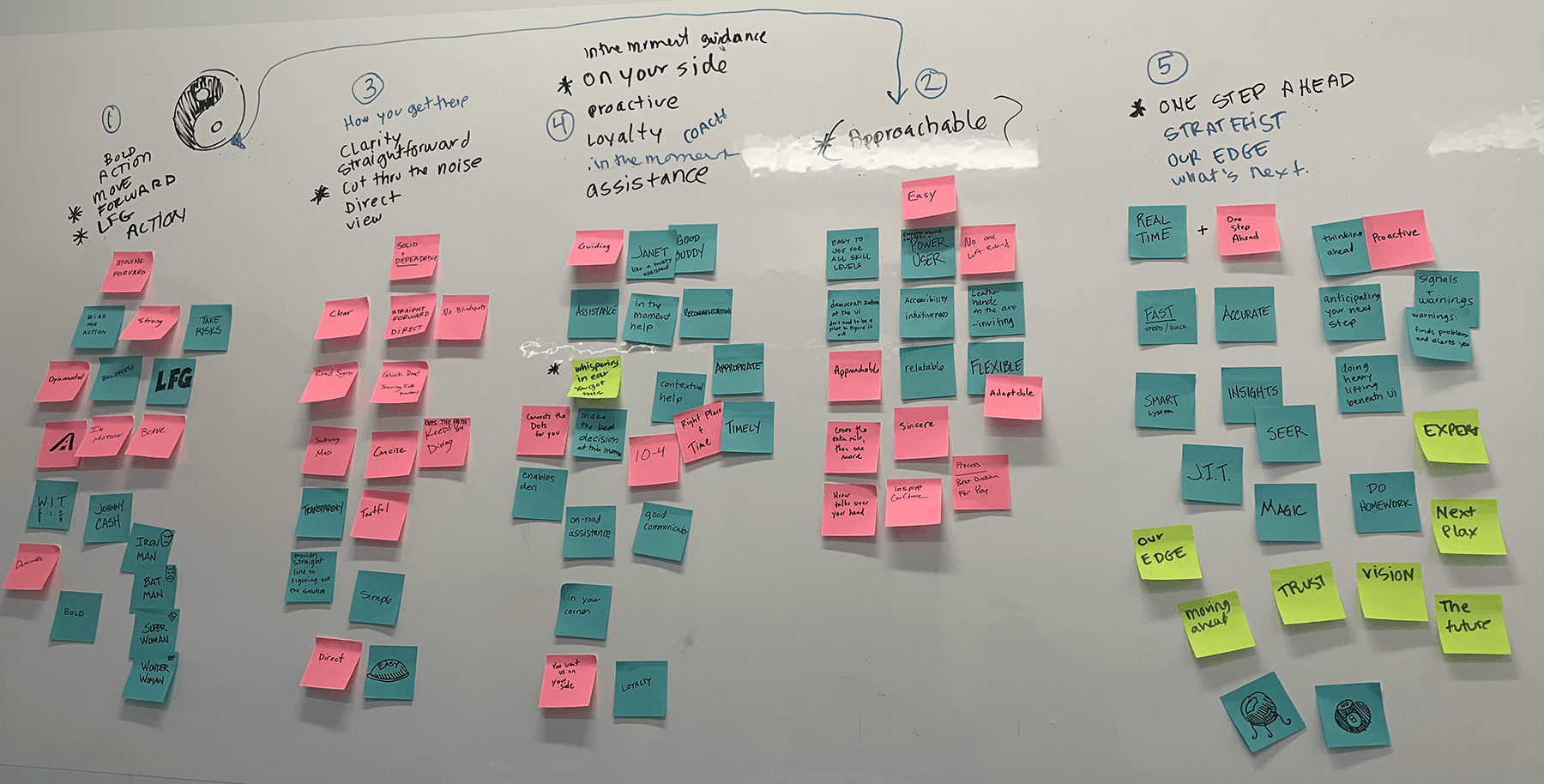
Design Principle Exercise
Experience Strategy
Focus on Aligning Digital Affordances with Physical Real-World Constraints
Edit reusable booking patterns with goal of letting the system adapt to reality, not the other way around.
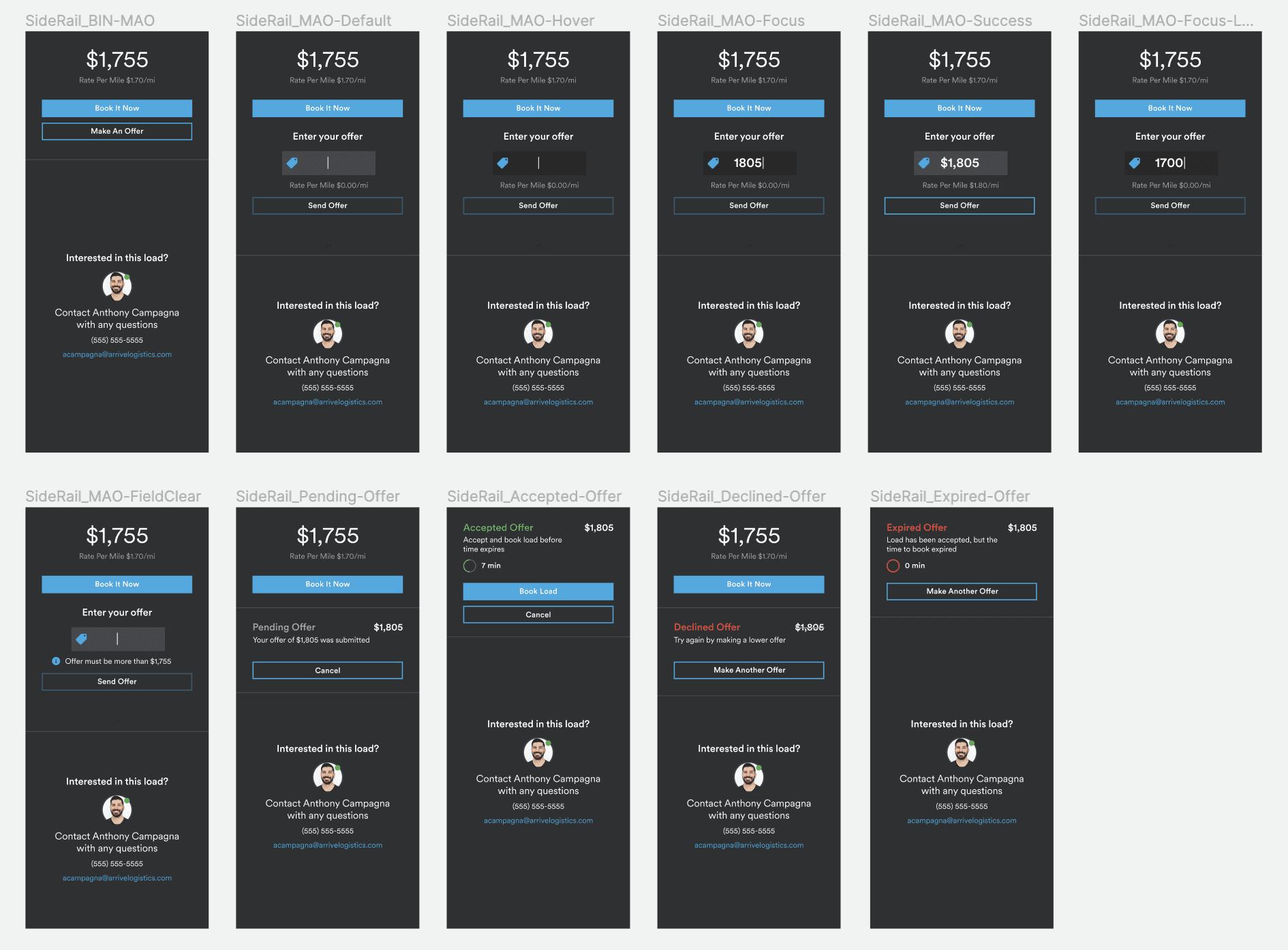
MVP Siderail
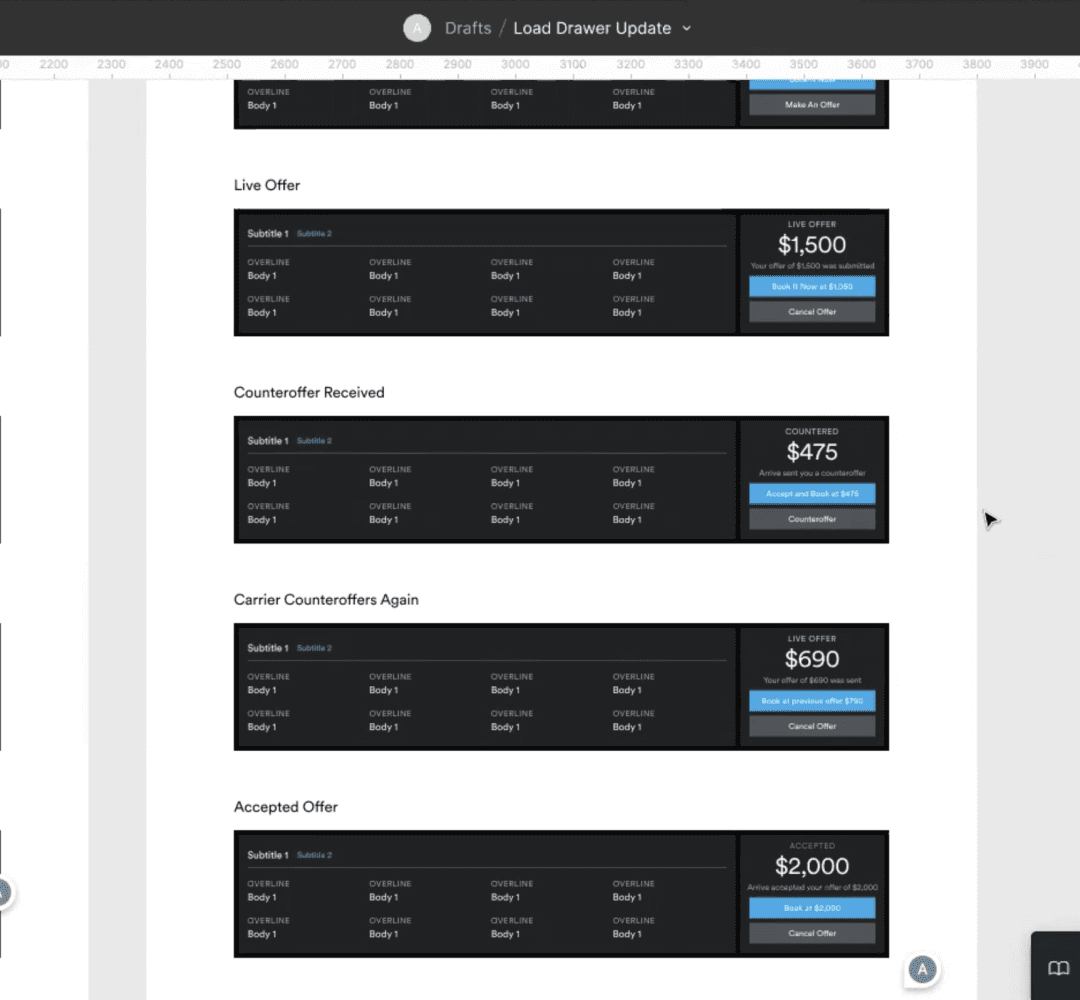
MVP Drawer
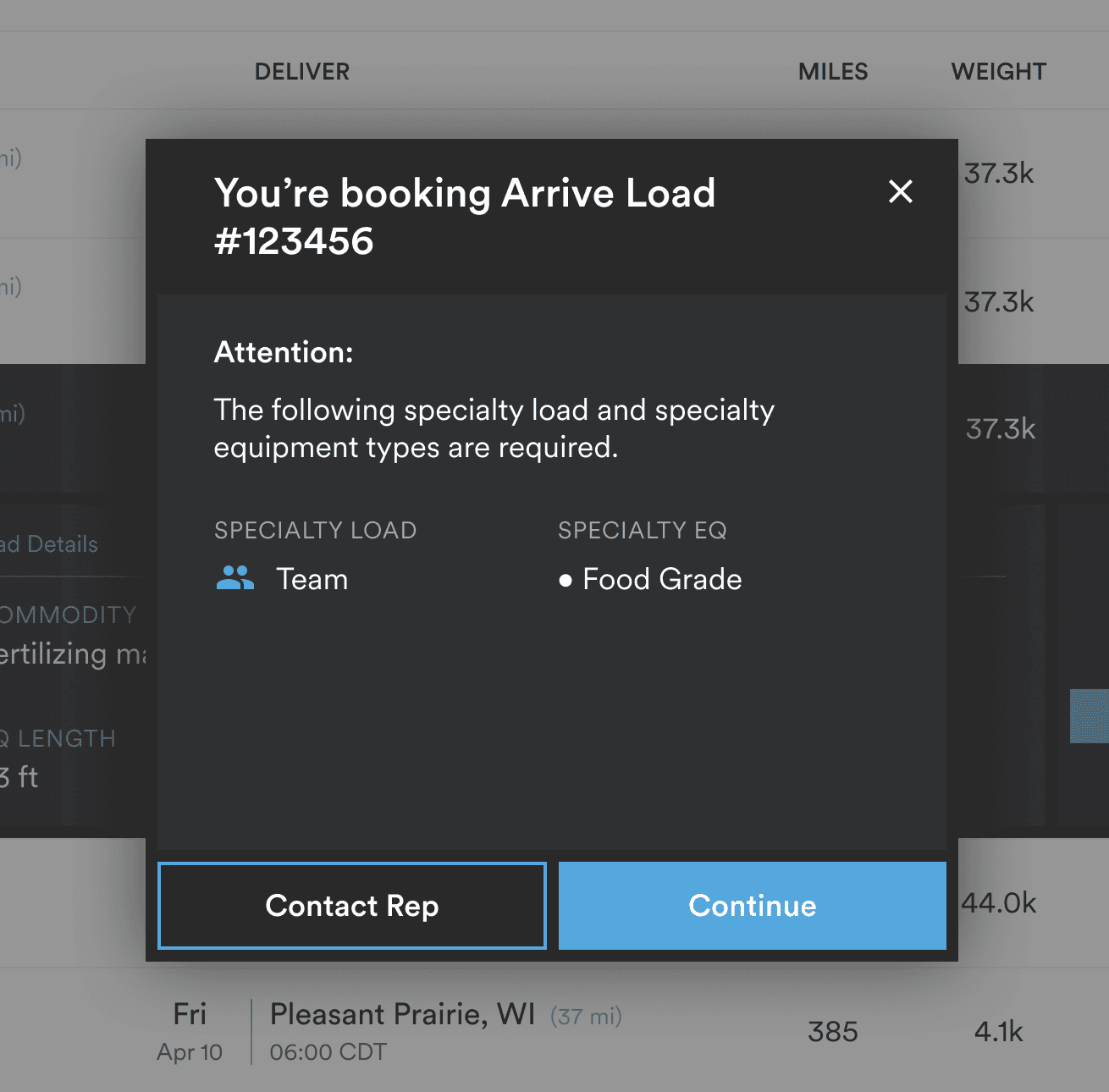
MVP Modal
Dynamically reveal relevant fields via progressive disclosure, showing carriers exactly what’s needed based on load type and booking scenario.
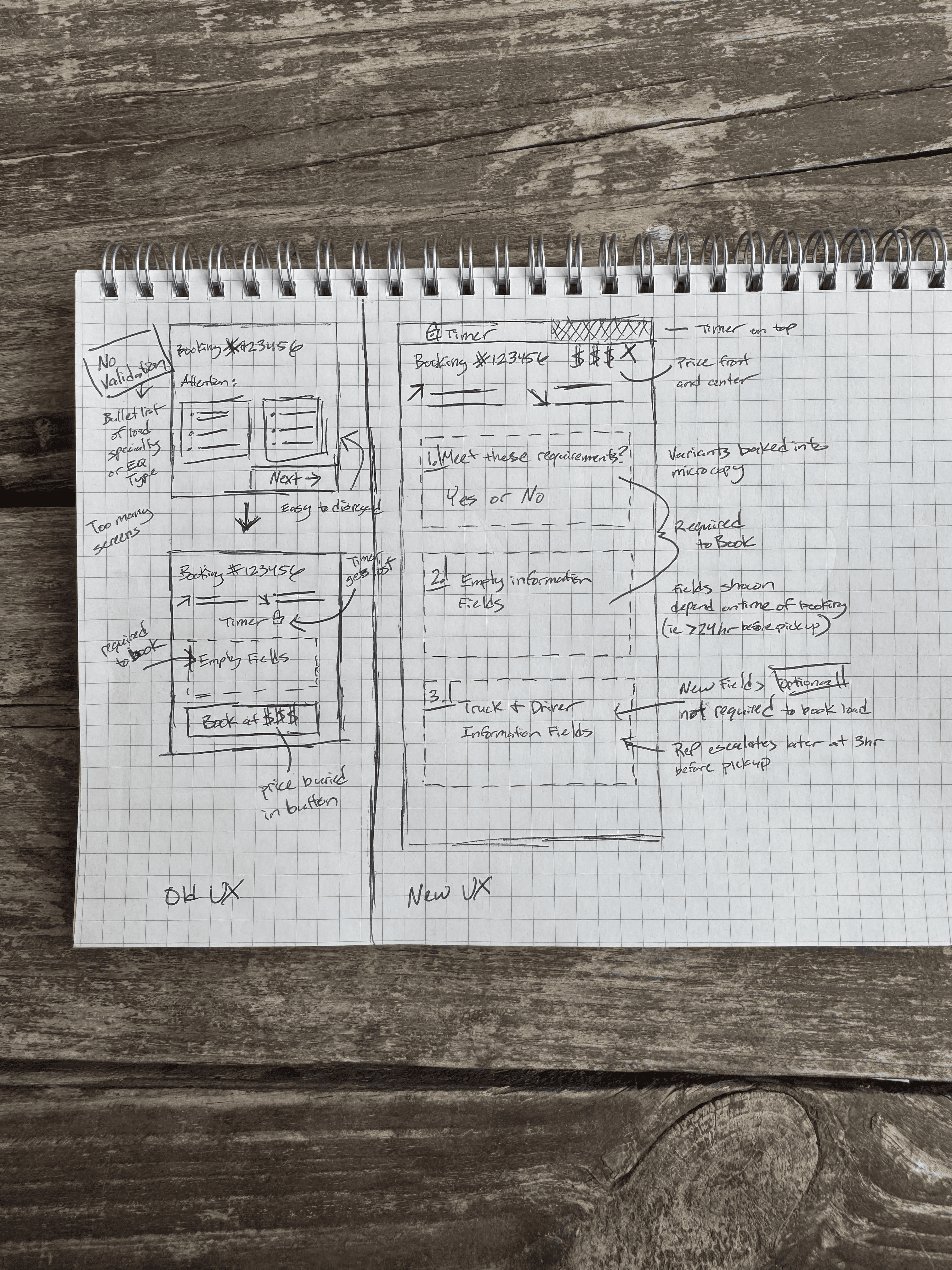
Design every screen and modal with only the bare minimum needed for an informed decision.
Hygiene Factor: If a competitor offers even $50-100 more per load with similar UX, they'll jump.
Validation and Outcomes
Match between system and real world
Ground booking decisions in how carriers actually plan, speak, and operate so the system feels familiar instead of procedural.
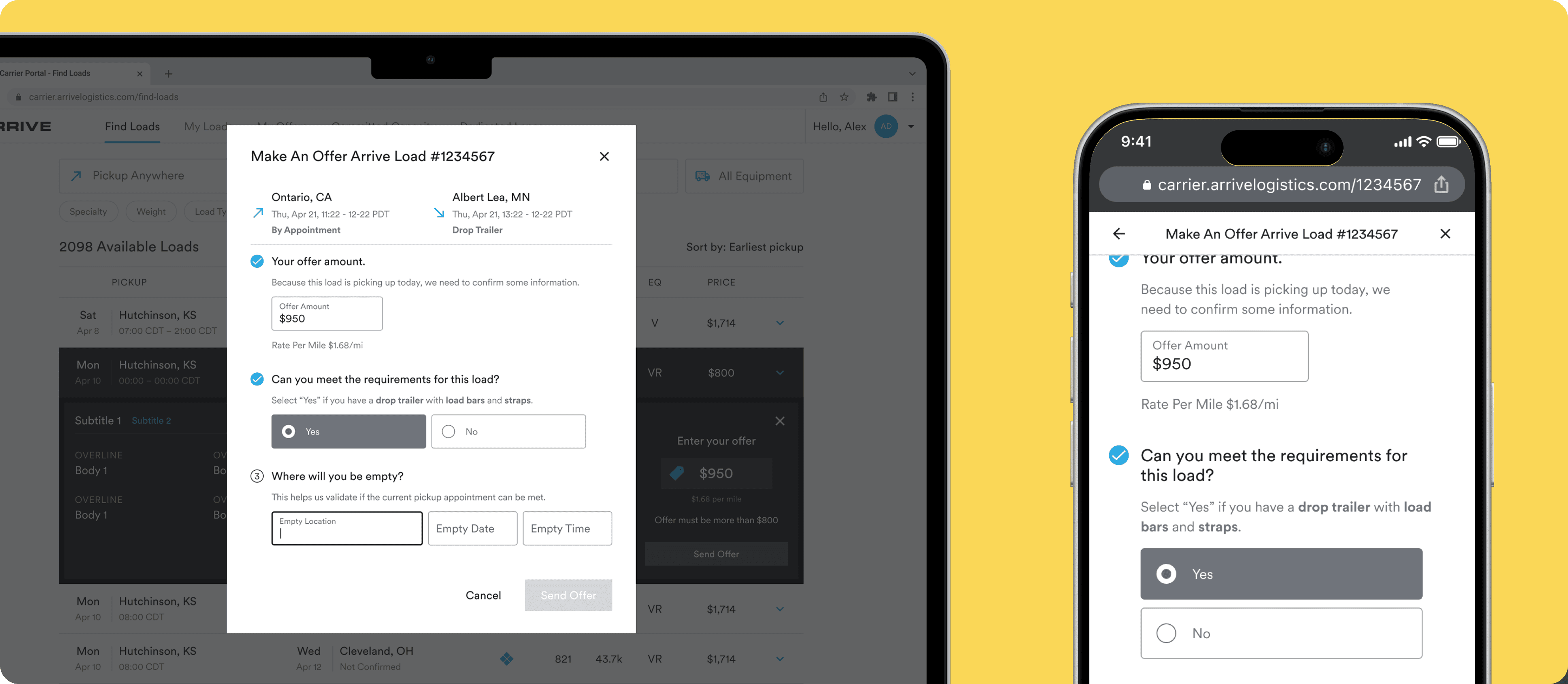
Pre-Booking Gatekeeper (modal)
Strategic Focus
Proactive Friction Mapping & Compliance.
Affordances
Validation (Acknowledging requirements), Temporal (Offer timer).
System’s Role
Acts as a Logic Gate. It forces the dispatcher to confirm "Physical Realities" (liftgates/commodity types) before the contract is finalized.
Outcome
It effectively moved the "Cancellation Moment" from the loading dock to the UI.
62%
2021
81%
2022
+31% more requirements met early
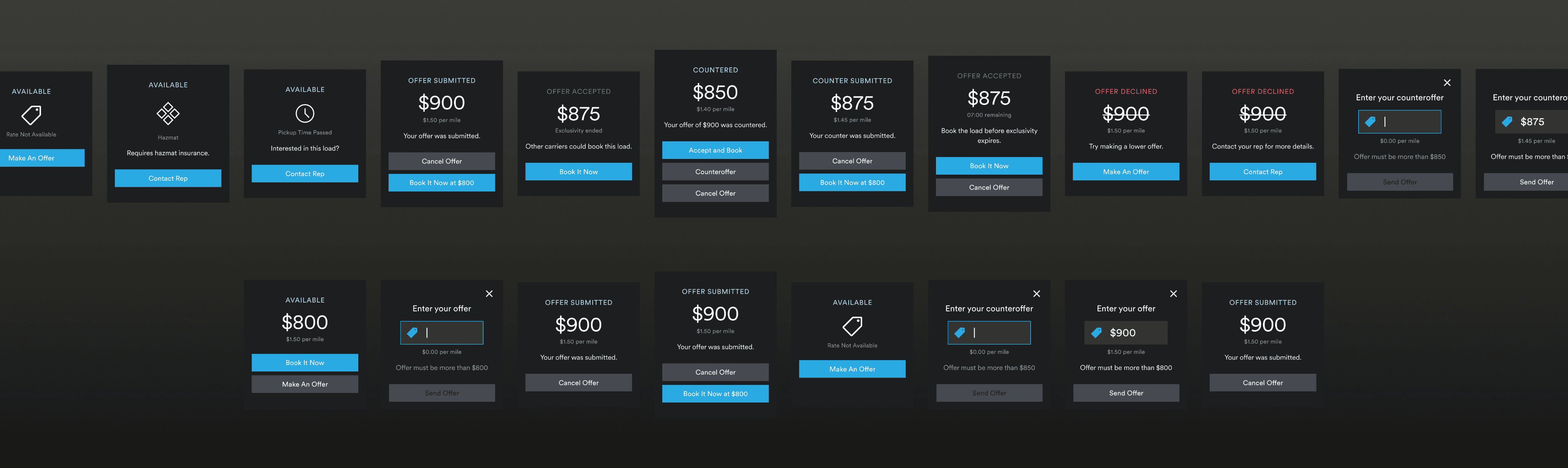
Atomic Components
Strategic Focus
Design-to-Engineering Velocity.
Affordances
Language (Industry jargon), Status (Visual variants for offer states).
Problem Solved
Instead of legacy code tied to our internal offer states, we built a new cohesive codebase around carrier-focused variants—using their language (Live Offer, Offer Declined, Countered, Pickup Time Passed, Tracking, etc.) for a more intuitive, aligned system.
Outcome
By creating a modular system, engineering was able to deploy complex marketplace updates in nearly half the time.
30 points
Before
48 points
After
1.6x faster iteration speed

“These reusable card patterns killed custom logic hell—cleaner code, faster iteration. Pumped to build features on this solid foundation now!”
—Software Engineer Feedback
Visibility of system status
Remove uncertainty by making system feedback obvious at every critical moment.
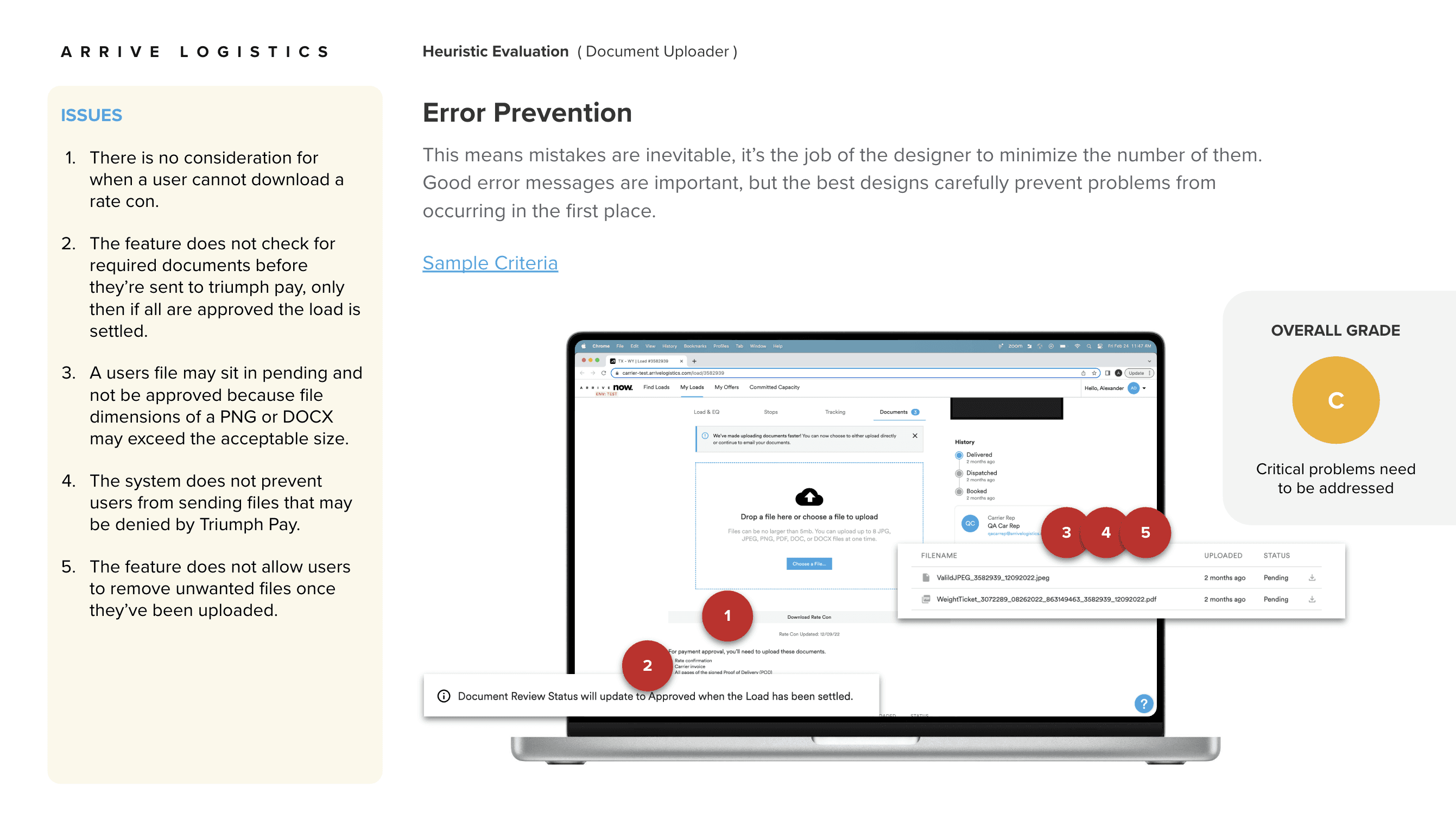
Payment Trust Tracker
Strategic Focus
Reducing Administrative "Noise."
Affordances
Status Affordance (document uploader).
System’s Role
Provides Automated Transparency. It replaces the "Black Box" of payment with a live feed of the document review lifecycle.
Problem Solved
Payment Anxiety. After booking, the "success" state is just the beginning.
Outcome
By proactively answering "Where is my money?", the system freed up brokers to focus on sales rather than manual status updates.
25%
2021
15%
2022
-40% fewer check-calls
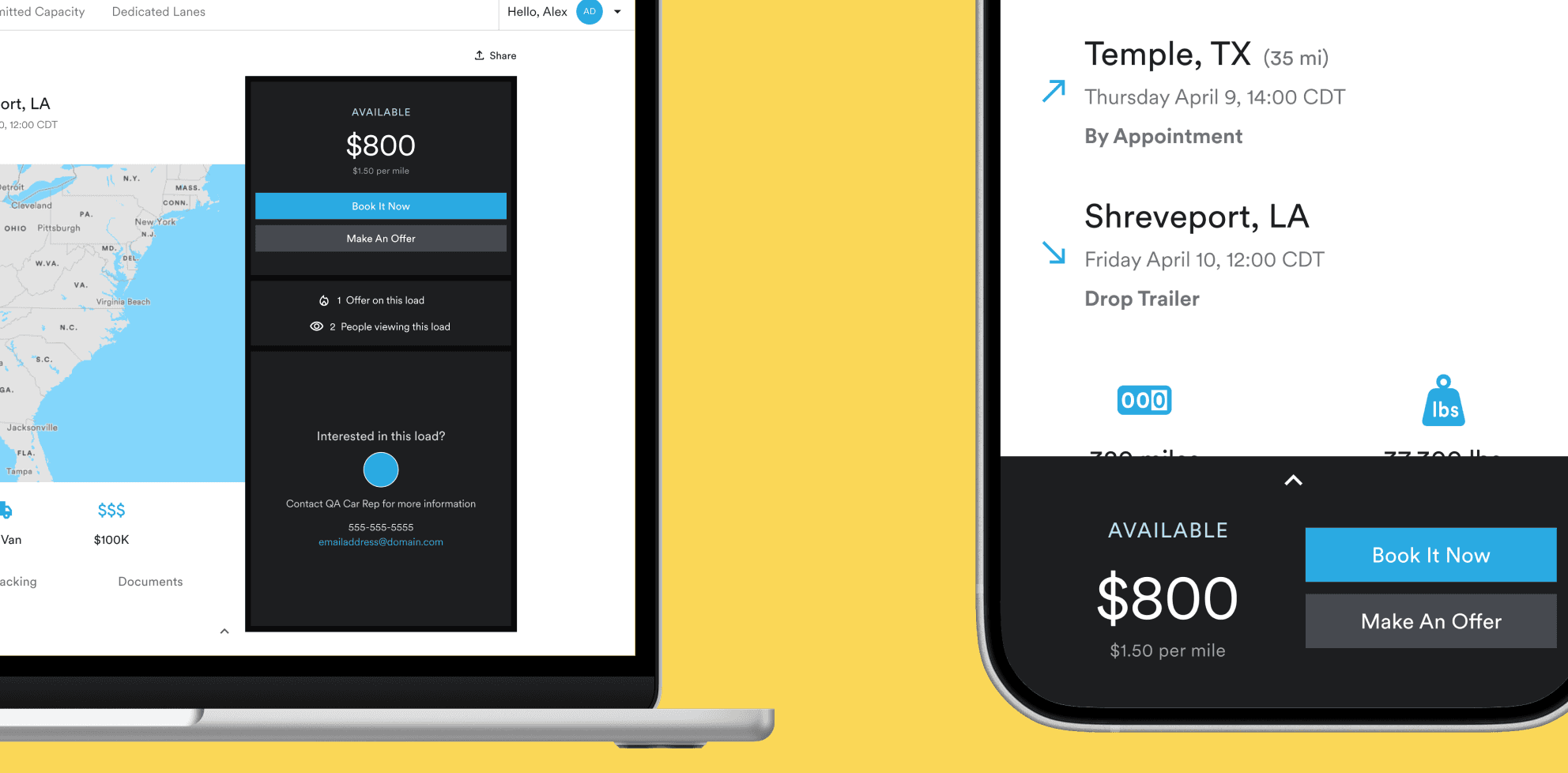
Marketplace Nudge
Strategic Focus
Maximizing Load Velocity.
Affordances
Status (Live view/offer counts), Language (Quick-share links).
Problem Solved
Decision Paralysis. Dispatchers often hesitate while waiting for better rates. Surfacing "Social Proof" (e.g., "5 people viewing this") creates the urgency needed to commit.
Outcome
While market volume increased, these affordances acted as a conversion multiplier, significantly reducing "Time-to-Book."
1,500 LPD
2021
2,500 LPD
2022
+67% Growth in Daily Booked Volume
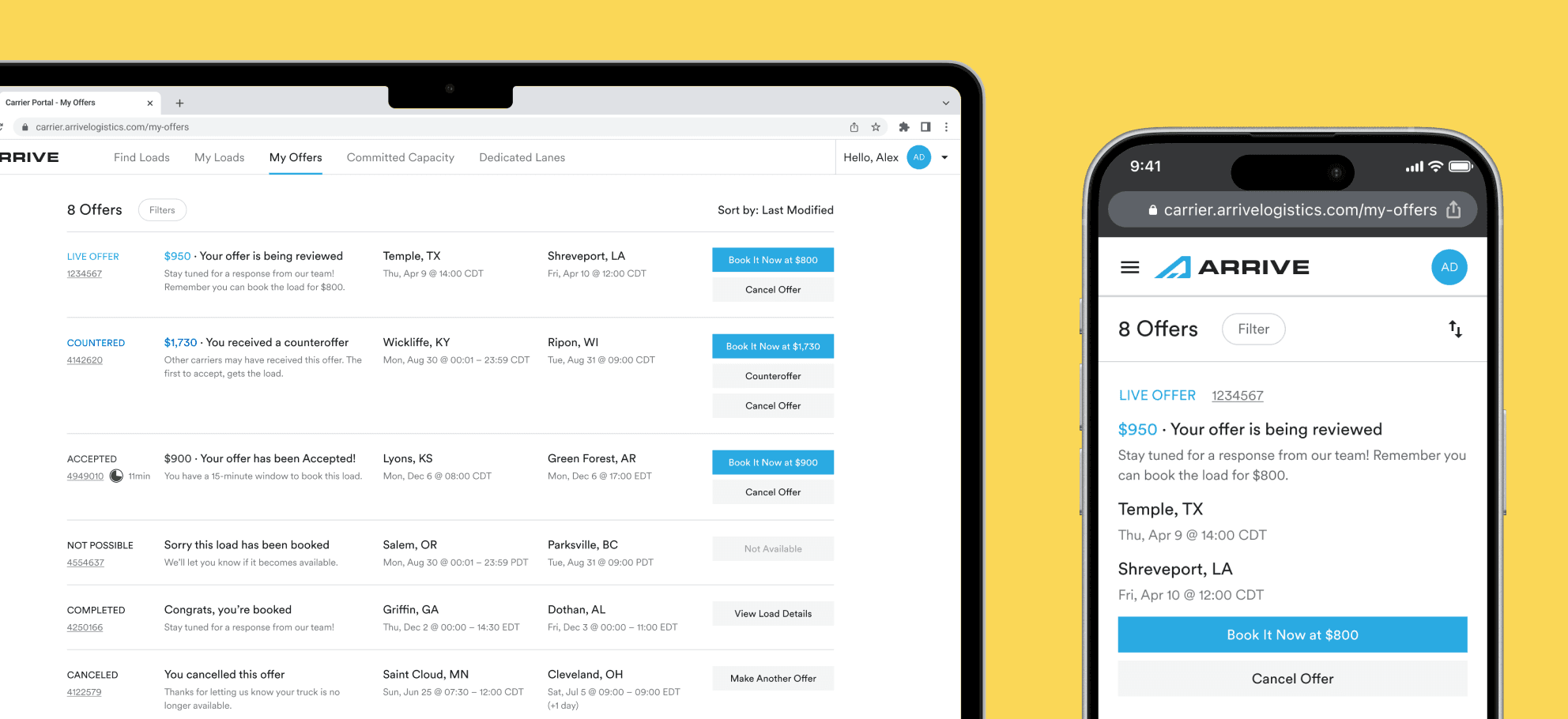
Management Command Center
Strategic Focus
Compliance Firewalls & Real-Time Orchestration.
Affordances
Constraint (Action Blocking), Temporal (Event-driven refetch), Logical (Last-modified sort).
System’s Role
Functions as a Compliance Firewall. The system monitors carrier status in the background; if insurance expires or HOS hours are exceeded, it disables the booking action and triggers a "Call Rep" instruction.
Outcome
The system handles the "Audit," allowing dispatchers to focus solely on moving freight rather than worrying about legal or safety violations.
Reduced Decision Fatigue
Copyright © 2025 Alex Dull Design